

I’ve spent years watching people struggle with mental health challenges, and I’ll be honest—most coping strategies I see recommended are either too complicated or simply don’t work when you’re in crisis. But through my research and personal experience, I’ve discovered seven evidence-based techniques that consistently deliver results. These aren’t feel-good platitudes or quick fixes. They’re practical tools that can genuinely transform how you handle stress, anxiety, and emotional overwhelm when you need them most.
Design Highlights
- Deep breathing (4-4-6 pattern) and progressive muscle relaxation activate the parasympathetic nervous system to reduce stress.
- Regular physical exercise releases endorphins and acts as natural mood elevators, with 20-minute walks showing significant benefits.
- Journaling and expressive writing help process emotions, clarify thoughts, and identify patterns in mental health triggers.
- Strong social support networks and meaningful connections enhance resilience and provide emotional perspective during difficult times.
- Creative activities like art, music, or crafting offer mindful stress relief while building long-term coping strategies.
Deep Breathing and Progressive Muscle Relaxation
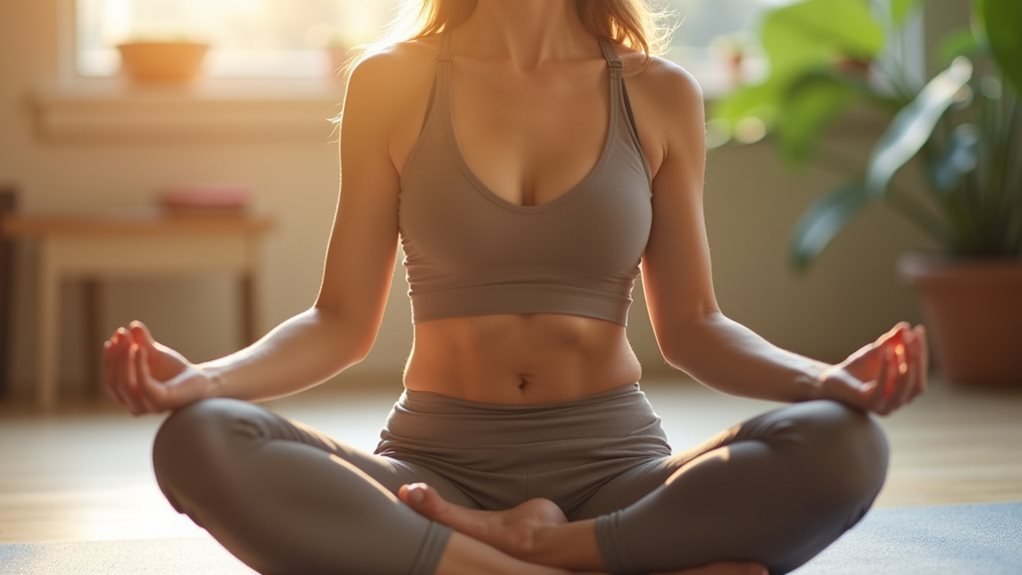
When stress overwhelms your nervous system, two fundamental techniques can quickly restore your sense of calm: deep breathing and progressive muscle relaxation.
I’ll teach you how deep breathing techniques work to activate your parasympathetic nervous system. Start by inhaling slowly through your nose for four counts, hold for four, then exhale through your mouth for six counts. This pattern signals your brain to shift from fight-or-flight mode to rest-and-digest mode.
This 4-4-6 breathing pattern activates your parasympathetic nervous system, shifting your brain from fight-or-flight to rest-and-digest mode.
Progressive muscle relaxation exercises complement breathing by releasing physical tension you’re carrying. Begin at your toes, deliberately tense each muscle group for five seconds, then release completely. Work systematically up your body—calves, thighs, abdomen, shoulders, arms, and face.
Practice these techniques daily, not just during crisis moments. I recommend starting with five minutes each morning. You’ll build muscle memory that makes accessing calm easier when anxiety strikes.
Both methods require no equipment and work anywhere—your desk, car, or bedroom.
Physical Exercise and Movement Therapy

While breathing techniques calm your mind from within, physical exercise transforms your mental health by flooding your system with natural mood elevators.
I’ve discovered that movement literally rewires your brain chemistry, releasing endorphins that combat depression and anxiety more effectively than many medications.
You don’t need intense workouts to reap these benefits. A simple 20-minute walk can shift your entire emotional state.
I particularly recommend exploring yoga practice, which combines physical movement with mindfulness, creating a powerful dual approach to stress relief.
Dance therapy offers another compelling option that I’ve seen work wonders. It allows you to express emotions through movement while simultaneously boosting your mood through rhythmic activity.
Whether you’re dancing alone in your living room or joining a structured class, you’re engaging both your body and mind in healing.
The key is consistency over intensity. Find movement that feels sustainable and enjoyable for long-term mental health benefits.
Mindfulness Meditation and Present-Moment Awareness
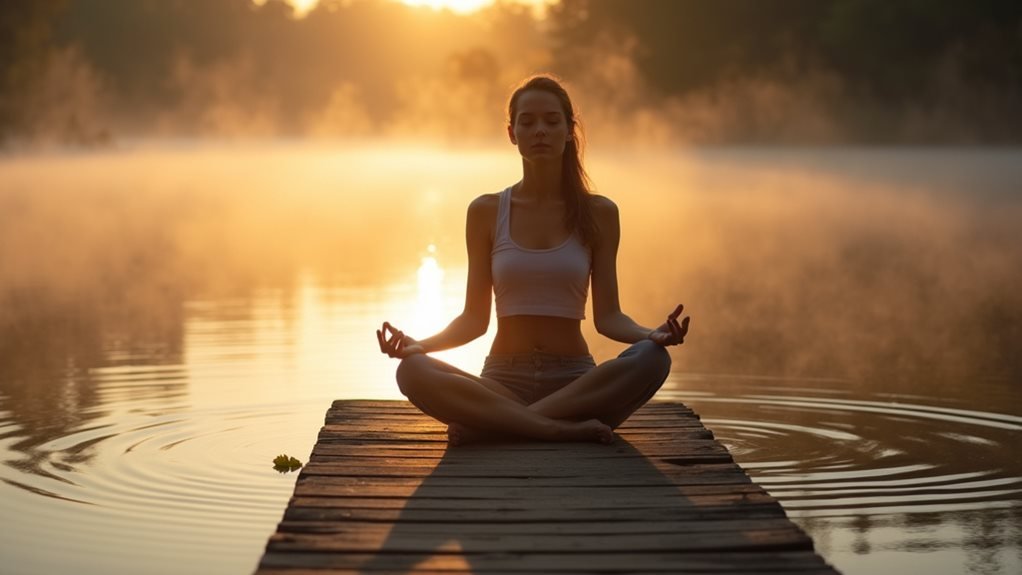
Although physical movement energizes your body, mindfulness meditation grounds you in the present moment where true healing begins.
I’ve found that when anxiety spirals or depression pulls me into dark thoughts, returning to the here-and-now through mindful observation creates immediate relief.
Mindfulness isn’t about emptying your mind—it’s about noticing what’s happening without judgment.
Mindfulness means observing your thoughts and feelings as they arise, without labeling them as good or bad.
When I practice sensory awareness, I focus on five things I can see, four I can hear, three I can touch, two I can smell, and one I can taste. This simple technique interrupts mental loops and anchors me to reality.
Start with just five minutes daily. Sit comfortably, breathe naturally, and observe your thoughts like clouds passing overhead.
Don’t fight them; acknowledge and release them. Regular practice rewires your brain’s response to stress, building resilience over time.
You’ll develop the ability to pause before reacting, transforming automatic responses into conscious choices.
Journaling and Expressive Writing

Where mindfulness brings you into the present, journaling helps you process the past and clarify your future. I’ve found that putting thoughts on paper creates distance between you and overwhelming emotions, making them more manageable.
Start with simple self reflection prompts like “What am I feeling right now?” or “What triggered my anxiety today?” Don’t worry about grammar or structure—this isn’t for anyone else. The goal is emotional release, not perfect prose.
Stream-of-consciousness writing works particularly well when you’re stuck. Set a timer for ten minutes and write whatever comes to mind without stopping. You’ll be surprised what surfaces.
I recommend keeping your journal private and writing consistently, even if it’s just a few sentences. Over time, you’ll notice patterns in your thoughts and behaviors, giving you valuable insights into your mental health triggers and strengths.
Social Support and Meaningful Connections

Even though writing can help process emotions privately, human connection remains one of our most powerful tools for healing.
Building strong support networks through meaningful relationships creates a foundation for resilience during challenging times.
Social engagement doesn’t just distract from problems—it actively strengthens your mental health through empathy cultivation and genuine connection.
When you invest in relationship building, you’re creating mutual support systems that benefit everyone involved.
Here are five ways to strengthen your social connections:
- Practice active listening without immediately offering solutions
- Join community involvement activities aligned with your values
- Schedule regular check-ins with friends and family members
- Volunteer for causes that matter to you
- Share vulnerable moments with trusted people in your life
The key isn’t having hundreds of connections—it’s nurturing quality relationships where you feel seen, heard, and valued.
These meaningful bonds provide emotional support, practical help, and perspective when you need them most.
Problem-Solving and Action Planning

While emotional support provides comfort during difficult times, taking concrete steps toward solutions empowers you to regain control over your circumstances.
I’ve found that structured problem-solving transforms overwhelming challenges into manageable tasks.
Start by clearly defining the specific problem you’re facing. Break it down into smaller, actionable components rather than viewing it as one massive obstacle.
Transform overwhelming challenges by breaking them into smaller, manageable pieces rather than tackling one insurmountable problem.
Next, brainstorm multiple potential solutions without judgment—quantity matters more than quality initially.
Effective goal setting techniques include creating SMART goals (Specific, Measurable, Achievable, Relevant, Time-bound) and writing them down. This clarity helps you track progress and maintain motivation.
Develop troubleshooting strategies for anticipated obstacles. Ask yourself: “What could go wrong, and how will I handle it?” Having backup plans reduces anxiety and keeps you moving forward when setbacks occur.
Creative Expression and Artistic Outlets

Art becomes a powerful language when words fail to capture our inner experiences. When I’m struggling with overwhelming emotions, creative expression offers me a safe space to process and release what’s bottled up inside. You don’t need to be a professional artist to benefit from these therapeutic outlets.
Creative activities that can transform your mental health journey include:
- Painting therapy – Let colors and brushstrokes express what you can’t verbalize
- Music composition – Create melodies that reflect your emotional landscape
- Dance improvisation – Move your body to release tension and stress
- Digital art – Use technology to explore visual storytelling
- Poetry slams – Transform pain into powerful spoken word
I’ve found that sculpture workshops also provide tactile satisfaction, helping me ground myself in the present moment.
These artistic outlets aren’t about creating masterpieces – they’re about giving your emotions a healthy, constructive way to flow outward instead of staying trapped within.
Frequently Asked Questions
How Long Does It Take to See Results From Healthy Coping Mechanisms?
I’ll help you understand timeframe expectations for seeing results. You might notice small improvements within days or weeks, but significant changes typically take 6-8 weeks of consistent practice.
I can’t give you an exact timeline since everyone’s different. What I can tell you is that patience practice becomes essential here – some techniques work immediately for stress relief, while deeper emotional healing takes months.
Don’t get discouraged if progress feels slow initially.
Can Coping Mechanisms Become Unhealthy if Used Too Frequently or Intensely?
Yes, I’ve seen how even positive coping strategies can become problematic when overused.
You might develop an unhealthy dependence on exercise, meditation, or journaling that prevents you from addressing root issues. When you use these mechanisms to completely shut down difficult emotions, they transform into emotional avoidance tools.
I recommend maintaining balance—coping strategies should support you through challenges, not replace genuine emotional processing or professional help when needed.
What Should I Do When Multiple Coping Strategies Aren’t Working Effectively?
Like a gardener whose usual tools aren’t breaking through hardened soil, I understand when your go-to strategies feel ineffective.
I’d recommend stepping back for deeper self reflection exercises—journaling about what’s changed or what underlying needs aren’t being met.
Consider support group involvement where you’ll discover new approaches from others facing similar struggles.
Sometimes we need fresh perspectives and community wisdom when our individual toolkit feels exhausted.
Are There Coping Mechanisms That Work Better for Specific Mental Health Conditions?
Yes, I’ve found that tailored strategies often work better for specific conditions.
For anxiety, I recommend grounding techniques and breathing exercises.
If you’re dealing with depression, behavioral activation and routine-building help more.
ADHD responds well to time-blocking and fidget tools.
PTSD benefits from trauma-informed approaches like EMDR preparation techniques.
I suggest matching your coping methods to your condition’s symptoms rather than using generic strategies that mightn’t address your specific challenges effectively.
How Do I Know if I Need Professional Help Beyond Coping Strategies?
When you’re drowning in your own thoughts, I want you to recognize the warning signs that indicate you need more than self-help strategies.
If you’re experiencing persistent thoughts of self-harm, can’t function in daily activities, or your symptoms worsen despite coping efforts, it’s time for professional intervention.
I encourage seeking support when relationships suffer, work performance declines, or you’re using substances to cope.
Don’t wait until you’re completely overwhelmed.
With this in Mind
I’ve walked you through seven powerful coping mechanisms that can truly make a difference in your mental health journey. Remember, Rome wasn’t built in a day – developing these healthy habits takes time and patience with yourself. You don’t need to master all seven at once. Start with one or two that resonate most with you, practice them consistently, and gradually build your mental wellness toolkit. Your future self will thank you.