

I’ve spent years battling anxiety, trying countless techniques that promised relief but delivered disappointment. Through trial and error, I’ve discovered that most advice out there is either too vague or completely impractical for real-world situations. However, I’ve finally identified ten research-backed strategies that consistently work when anxiety strikes. These aren’t feel-good platitudes or quick fixes—they’re proven methods that’ll give you actual control when your mind starts spiraling.
Design Highlights
- Practice deep breathing (4 counts in, 4 hold, 6 out) to activate your body’s natural relaxation response.
- Use cognitive restructuring to identify and challenge unrealistic anxious thoughts with evidence-based alternatives.
- Engage in regular moderate exercise for 10-15 minutes daily to release endorphins and reduce stress hormones.
- Apply grounding techniques like the 5-4-3-2-1 method to redirect focus from anxiety to present sensory experiences.
- Establish consistent sleep schedules and bedtime routines to improve rest quality and reduce anxiety symptoms.
Practice Deep Breathing and Progressive Muscle Relaxation

When anxiety strikes, your body’s fight-or-flight response kicks into overdrive, flooding your system with stress hormones that create physical tension and racing thoughts.
I’ve found that combining deep breathing with progressive muscle relaxation creates a powerful antidote to this physiological chaos.
Start with deep breathing: inhale slowly through your nose for four counts, hold for four, then exhale through your mouth for six counts. This activates your parasympathetic nervous system, signaling your body to calm down.
Next, add progressive muscle relaxation. Beginning with your toes, tense each muscle group for five seconds, then release completely. Work your way up through your calves, thighs, abdomen, arms, shoulders, and face. This technique helps you recognize the difference between tension and relaxation.
Progressive muscle relaxation teaches your body the contrast between tension and calm by systematically tightening and releasing each muscle group.
Practice these techniques daily, not just during anxiety episodes. Regular practice strengthens your ability to activate these calming responses when you need them most.
Challenge Negative Thought Patterns With Cognitive Restructuring
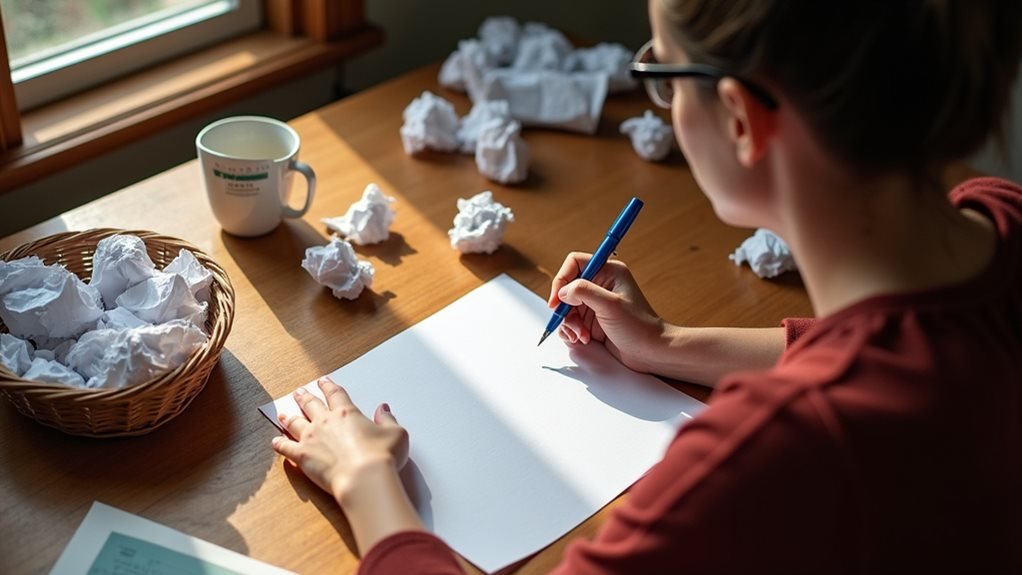
While deep breathing calms your body, your anxious mind often continues spinning catastrophic scenarios that fuel your distress. That’s where cognitive restructuring becomes essential – I’ll teach you to identify and challenge the distorted thoughts driving your anxiety.
Start by recognizing common cognitive distortions like catastrophizing (“This will end in disaster”), all-or-nothing thinking (“I’m a complete failure”), or mind reading (“Everyone thinks I’m incompetent”). These mental traps amplify anxiety unnecessarily.
Keep thought journals to track your anxious thoughts. When anxiety hits, write down what you’re thinking, then ask yourself: “Is this thought realistic? What evidence supports or contradicts it? What would I tell a friend in this situation?”
Replace distorted thoughts with balanced alternatives. Instead of “I’ll definitely mess up this presentation,” try “I’m prepared, and even if I make mistakes, I can handle them.”
This practice rewires your brain’s response to stressful situations over time.
Establish a Consistent Sleep Schedule and Sleep Hygiene Routine
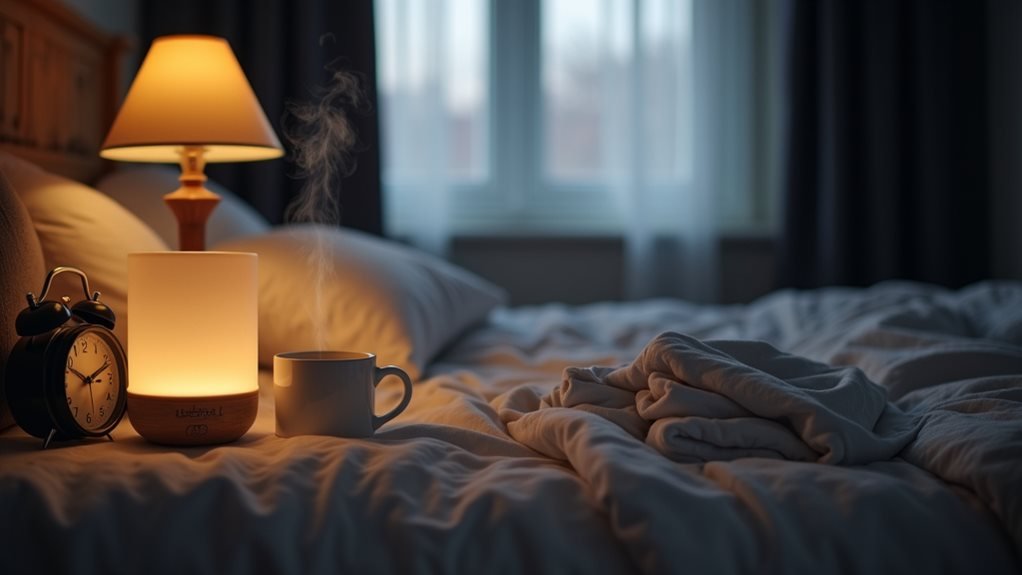
Since anxiety and sleep problems feed off each other in a vicious cycle, establishing consistent sleep habits becomes essential for managing your anxiety levels.
I recommend creating a sleep environment that promotes relaxation by keeping your bedroom cool, dark, and quiet to support your natural circadian rhythm.
Start developing bedtime rituals that signal your body it’s time to wind down. This includes implementing a digital detox at least one hour before bed, as screens disrupt sleep quality.
Instead, try relaxation techniques like deep breathing or gentle stretching for effective stress reduction.
Consider sleep tracking to identify patterns affecting your rest. While sleep supplements can help short-term, focus on eliminating sleep distractions first.
Keep electronics out of reach, use blackout curtains, and maintain the same sleep and wake times daily.
Consistency trains your body’s internal clock, reducing anxiety-driven insomnia and improving overall mental resilience.
Incorporate Regular Physical Exercise Into Your Daily Routine

Although many people view exercise as purely physical, regular movement serves as one of the most powerful natural remedies for anxiety by triggering the release of endorphins and reducing stress hormones like cortisol.
I’ve discovered that you don’t need intense gym sessions to experience cardio benefits for your mental health. Even moderate activities like brisk walking, dancing, or cycling can considerably reduce anxiety symptoms within 20-30 minutes.
Here’s how I recommend incorporating exercise routines into your daily life:
- Start small – Begin with 10-15 minutes of movement daily, whether it’s stretching, walking, or light cardio.
- Choose activities you enjoy – You’re more likely to stick with exercise that feels fun rather than punishing.
- Schedule it consistently – Treat physical activity like any important appointment by blocking specific times in your calendar.
The key isn’t perfection but consistency. Regular movement creates lasting changes in your brain chemistry that build resilience against anxiety over time.
Use Mindfulness Meditation and Grounding Techniques
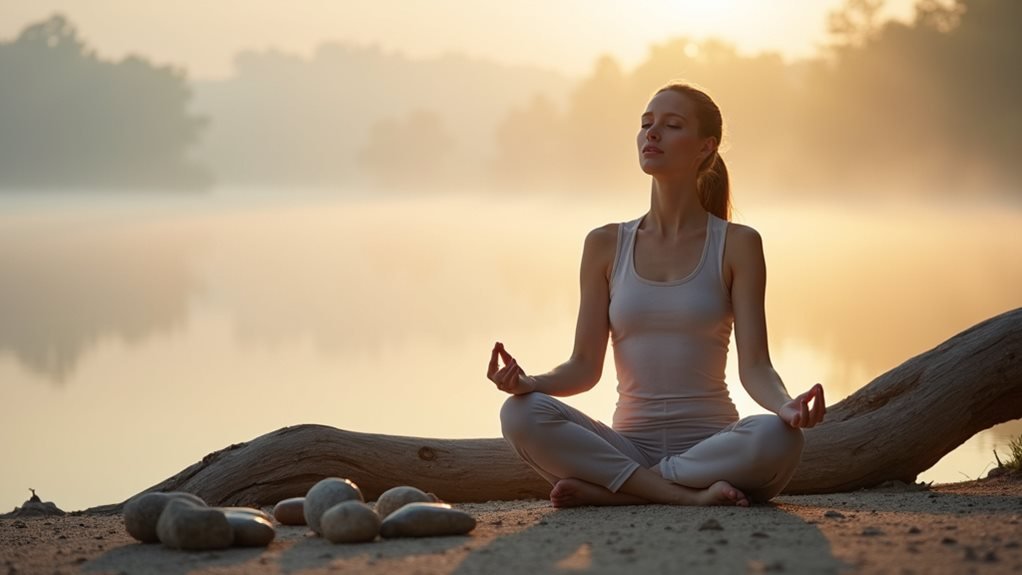
Within minutes of practicing mindfulness meditation, you can shift your brain from anxiety’s fight-or-flight mode into a calmer, more centered state.
These mindfulness techniques anchor you firmly in the present moment, breaking anxiety’s cycle of racing thoughts about future worries.
Mindfulness creates an anchor point that stops anxious minds from spiraling into endless loops of what-if scenarios.
I recommend starting with focused breathing exercises. Breathe in for four counts, hold for four, then exhale for six. This simple practice activates your body’s relaxation response and improves emotional regulation.
Grounding exercises offer immediate stress relief when anxiety peaks. Try the 5-4-3-2-1 technique: identify five things you see, four you can touch, three you hear, two you smell, and one you taste.
This sensory engagement pulls your awareness practices back to reality.
Visualization methods amplify meditation benefits. Picture yourself in a peaceful setting while maintaining steady breathing.
Regular practice strengthens your ability to access calm states quickly, making these techniques powerful tools for long-term anxiety management.
Limit Caffeine, Alcohol, and Other Anxiety Triggers

While you’re building your mindfulness practice, certain substances can undermine your progress by amplifying anxiety symptoms.
I’ve learned that what you consume directly impacts your stress management efforts, and making strategic dietary changes can greatly reduce anxiety triggers.
Here are three key areas to monitor:
- Caffeine intake – I recommend switching to caffeine alternatives like herbal teas or decaf options. Even moderate amounts can trigger racing thoughts and physical symptoms that mimic anxiety attacks.
- Alcohol consumption – Alcohol awareness is vital since it disrupts sleep patterns and creates rebound anxiety as it metabolizes. You might feel temporary relief, but it worsens symptoms long-term.
- Sugar and processed foods – These cause blood sugar spikes and crashes that can trigger anxiety-like symptoms throughout the day.
Start by eliminating one trigger at a time rather than making drastic changes simultaneously.
You’ll notice improvements in your overall anxiety levels within days.
Create Structure With Time Management and Planning Tools
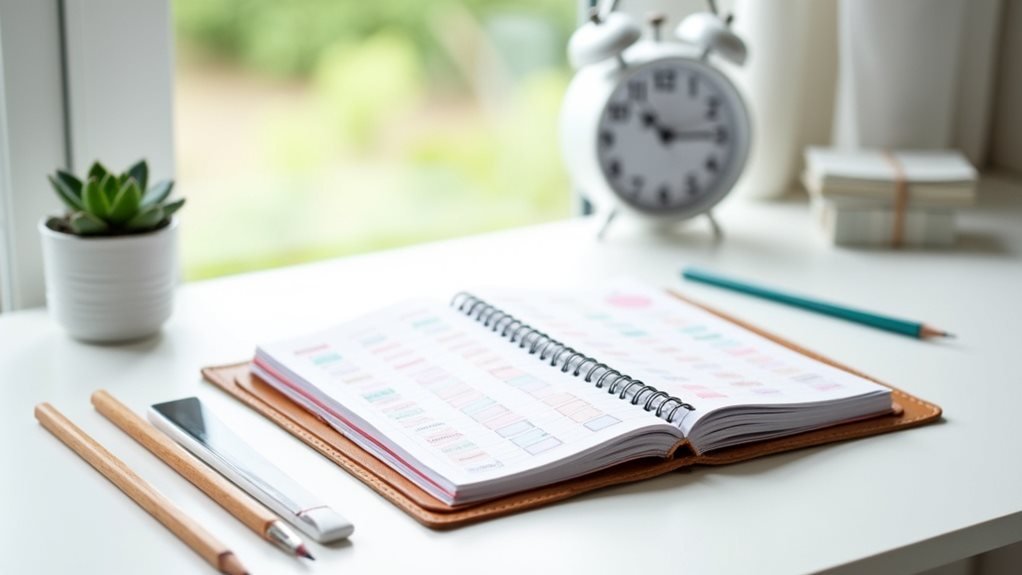
Since chaos feeds anxiety while structure promotes calm, I’ve discovered that effective time management serves as a powerful anxiety-reduction tool. When I’m overwhelmed by endless tasks, creating clear systems transforms mental clutter into manageable action steps.
Clear systems transform overwhelming mental clutter into manageable steps, proving that structure is anxiety’s antidote.
I start with time blocking, dedicating specific hours to focused work. Priority setting helps me tackle what matters most first, while goal tracking keeps me accountable to meaningful progress. Daily planners become my roadmap, whether I prefer physical notebooks or digital tools like productivity apps.
Weekly reviews let me assess what’s working and make routine adjustments. I sync my calendar across devices to avoid scheduling conflicts, and I’m learning that task delegation isn’t failure—it’s strategic.
The key is finding your rhythm. Some people thrive with detailed scheduling, while others need flexible frameworks. Experiment with different approaches until you discover what brings you calm instead of additional stress.
Build a Strong Support Network and Communication Skills

Although anxiety often makes us want to isolate ourselves, reaching out to others creates one of our strongest defenses against overwhelming feelings.
Building meaningful connections requires intentional relationship building and trust development through consistent social engagement.
I’ve found three essential approaches that strengthen your support network:
- Practice active listening and effective communication – Focus completely on what others share, ask clarifying questions, and express your thoughts clearly without judgment.
- Seek emotional validation through support groups – Join anxiety-focused communities where members understand your struggles and provide genuine encouragement during difficult moments.
- Develop conflict resolution skills – Learn to address disagreements calmly, express your needs directly, and find compromises that preserve relationships.
These communication skills create deeper connections with family, friends, and new acquaintances.
When anxiety strikes, you’ll have trusted people who understand your experience and can offer practical support, perspective, and reassurance during challenging times.
Develop Healthy Boundaries and Learn to Say No

Setting clear boundaries becomes essential when anxiety stems from overcommitment and people-pleasing behaviors. When you consistently say yes to everything, you’re setting yourself up for overwhelming stress and burnout.
Saying yes to everything creates a guaranteed path to overwhelming stress, anxiety, and eventual burnout.
I’ve learned that boundary setting isn’t selfish—it’s necessary for mental health. Start small by identifying situations where you feel pressured or resentful. These are perfect opportunities to practice saying no.
Assertive communication makes boundary setting easier. Use phrases like “I can’t commit to that right now” or “That doesn’t work for my schedule.” You don’t need elaborate explanations or apologies.
Remember, people will respect your boundaries when you respect them yourself. Those who push back against your limits often benefit from your lack of boundaries.
Practice saying no to low-stakes requests first. This builds confidence for bigger situations. Your anxiety will decrease as you create space for what truly matters to you.
Seek Professional Help When Self-Management Isn’t Enough
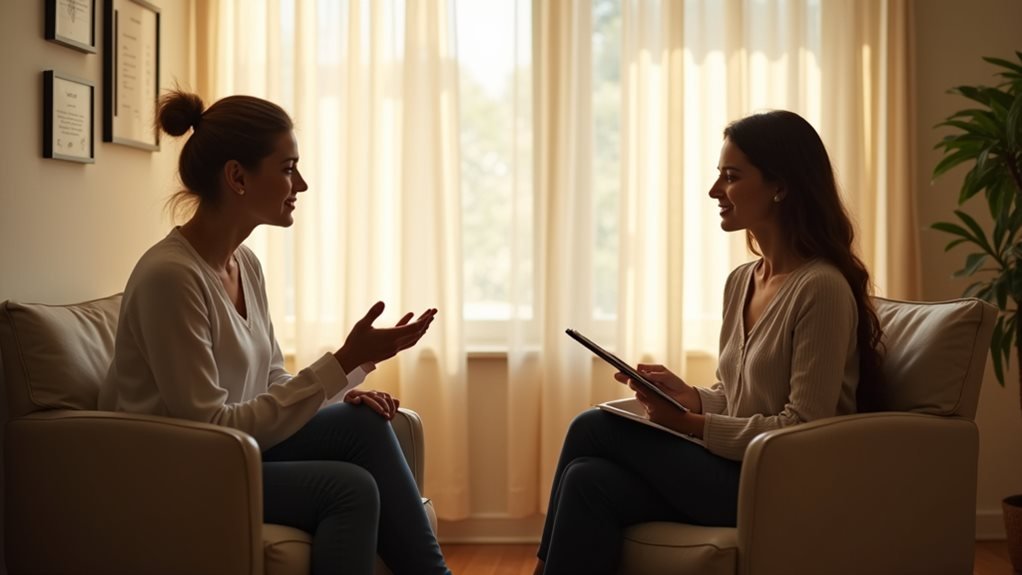
While self-help strategies can effectively manage mild to moderate anxiety, there comes a point where professional intervention becomes necessary. I understand it’s difficult to admit when you need extra support, but recognizing these limits shows strength, not weakness.
Consider seeking professional help when:
- Your anxiety interferes with daily functioning – work performance suffers, relationships strain, or basic activities become overwhelming.
- Physical symptoms persist despite self-care efforts – chronic insomnia, panic attacks, or unexplained physical pain continue affecting your quality of life.
- You’re experiencing thoughts of self-harm – immediate professional intervention becomes critical for your safety.
Mental health professionals offer various therapy options tailored to anxiety disorders. Cognitive-behavioral therapy, exposure therapy, and medication management can provide tools that self-management alone can’t deliver.
I’ve seen countless individuals transform their lives through professional support combined with personal coping strategies.
Frequently Asked Questions
How Long Does It Typically Take to See Results From Anxiety Coping Strategies?
I’ll tell you that timing expectations for anxiety relief vary greatly. You might notice some immediate benefits from breathing exercises or grounding techniques within minutes.
However, I’ve found that most people see meaningful changes after 2-4 weeks of consistent practice. Individual variations play a huge role – your background, anxiety severity, and commitment level all affect progress.
I recommend giving strategies at least a month before deciding they’re ineffective for you.
Can Anxiety Coping Strategies Work for Severe Anxiety or Panic Disorders?
Climbing mountains starts with single steps, and I’ll tell you that coping strategies definitely can help with severe anxiety and panic disorders.
While they’re powerful tools, I recommend you combine them with professional treatment for the best results. Techniques like deep breathing, grounding exercises, and cognitive restructuring can greatly reduce your symptoms’ intensity.
However, don’t hesitate to seek therapy or medication alongside these strategies for thorough care.
What Should I Do if Multiple Coping Strategies Aren’t Working Together?
I’d recommend stepping back and conducting a thorough coping strategy evaluation.
Sometimes strategy combinations can actually work against each other or overwhelm your system.
I suggest simplifying your approach by focusing on just one or two techniques that felt most natural to you.
If you’re still struggling, it’s time to consult a mental health professional who can help identify why certain combinations aren’t effective and guide you toward more personalized solutions.
Are There Specific Coping Strategies That Work Better for Different Anxiety Types?
I noticed my client Sarah struggled with social anxiety at parties but excelled using grounding techniques, while her breathing exercises worked better for panic attacks.
Different anxiety types do respond to specific strategies. Social anxiety benefits from gradual exposure and cognitive restructuring.
Generalized anxiety responds well to worry time and mindfulness. Panic disorder improves with breathing techniques.
Performance anxiety uses visualization. Situational anxiety needs specific rehearsal. Health anxiety requires thought challenging and reassurance reduction.
How Do I Know Which Anxiety Coping Strategy to Try First?
I recommend starting with an initial assessment of your anxiety patterns.
Notice when you’re most anxious, what triggers it, and how your body responds. This personalized approach helps you choose the right strategy first.
If you experience physical symptoms like racing heart, try breathing exercises. For racing thoughts, consider grounding techniques.
Start with what feels most natural to you, then experiment. There’s no wrong choice—it’s about finding what resonates with your specific needs.
With this in Mind
I’ve watched countless clients transform their anxiety from a roaring wildfire into manageable embers. Sarah, a marketing executive, went from three panic attacks weekly to none in six months by combining breathing techniques with professional therapy. Research shows 80% of people experience significant anxiety reduction when using multiple strategies together. You don’t need to master every technique—just find your personalized toolkit. Your anxiety doesn’t define you; your response to it does.