
I’ll bet you didn’t know that your body can’t tell the difference between a real threat and an imagined one—that’s why your heart races during both job interviews and horror movies. Most people think anxiety management requires expensive therapy or medication, but I’ve discovered three research-backed techniques that can literally rewire your stress response in minutes. These aren’t feel-good placeholders; they’re scientifically proven methods that create measurable changes in your nervous system, and I’m about to show you exactly how they work.
Design Highlights
- Deep breathing activates the parasympathetic nervous system, reducing stress by focusing on slow nasal breathing with belly expansion.
- Progressive muscle relaxation systematically releases physical tension by tensing and relaxing each muscle group for five seconds.
- Cognitive behavioral restructuring identifies and replaces anxious thoughts with balanced alternatives, rewiring default thought patterns through consistent practice.
- Mindfulness meditation teaches observation of anxiety without judgment, gradually building present-moment awareness over five to twenty minutes daily.
- Guided imagery complements mindfulness by visualizing peaceful scenes, engaging all senses to reduce cortisol levels and activate relaxation responses.
Deep Breathing and Progressive Muscle Relaxation
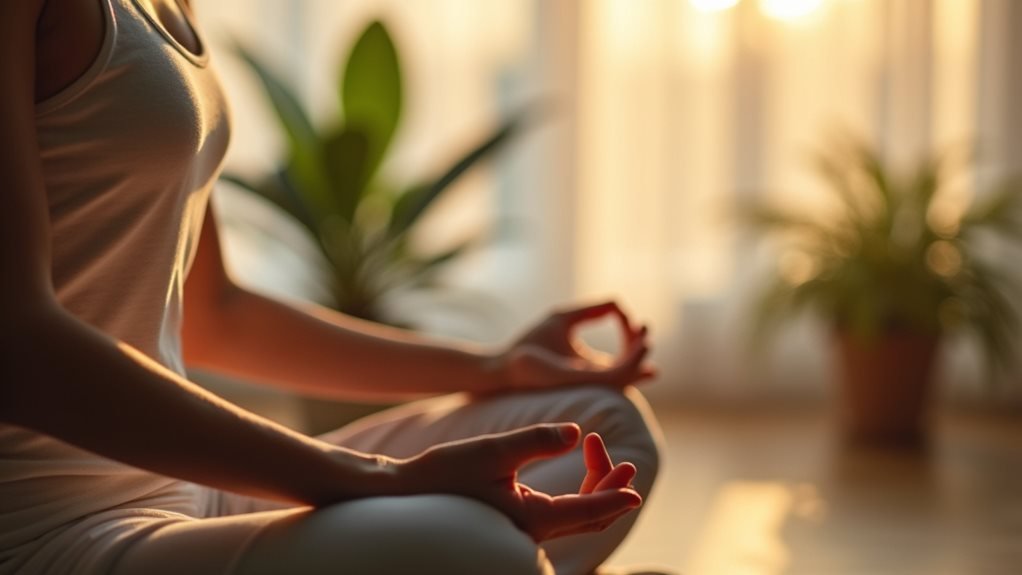
When your stress levels spike, two of the most accessible and effective techniques you can use are deep breathing and progressive muscle relaxation.
I recommend starting with diaphragmatic breathing. Place one hand on your chest and another on your belly. Breathe slowly through your nose, ensuring your belly rises more than your chest. This activates your parasympathetic nervous system, signaling your body to calm down.
Progressive muscle relaxation targets physical stress by addressing muscle tension systematically. Start with your toes and work upward. Tense each muscle group for five seconds, then release completely. Notice the contrast between tension and relaxation.
Progressive muscle relaxation systematically releases physical tension by contracting and releasing each muscle group from toes upward.
You’ll find these techniques work best when practiced regularly, not just during stressful moments. I suggest dedicating ten minutes daily to either method.
The beauty lies in their simplicity—you can perform them anywhere without special equipment. Your body will learn to respond more quickly with consistent practice.
Cognitive Behavioral Restructuring for Anxious Thoughts

While deep breathing and muscle relaxation address the physical symptoms of stress, your anxious thoughts often fuel the cycle that keeps stress alive.
I’ll show you how cognitive behavioral restructuring can break this pattern by targeting the root cause.
Your mind creates stories that aren’t always accurate. When you notice anxious thoughts, pause and examine them objectively. Ask yourself: “Is this thought realistic? What evidence supports or contradicts it?”
Common cognitive distortions include catastrophizing (“Everything will go wrong”), all-or-nothing thinking (“I’m a complete failure”), and mind reading (“They think I’m incompetent”). These thought patterns amplify stress unnecessarily.
Replace distorted thoughts with balanced alternatives. Instead of “I’ll never succeed,” try “This is challenging, but I can learn from setbacks.” Write down your anxious thoughts, identify the distortion, then craft a more realistic perspective.
Consistent practice rewires your brain’s default thought patterns, reducing anxiety’s grip on your daily life.
Mindfulness-Based Stress Reduction Practice
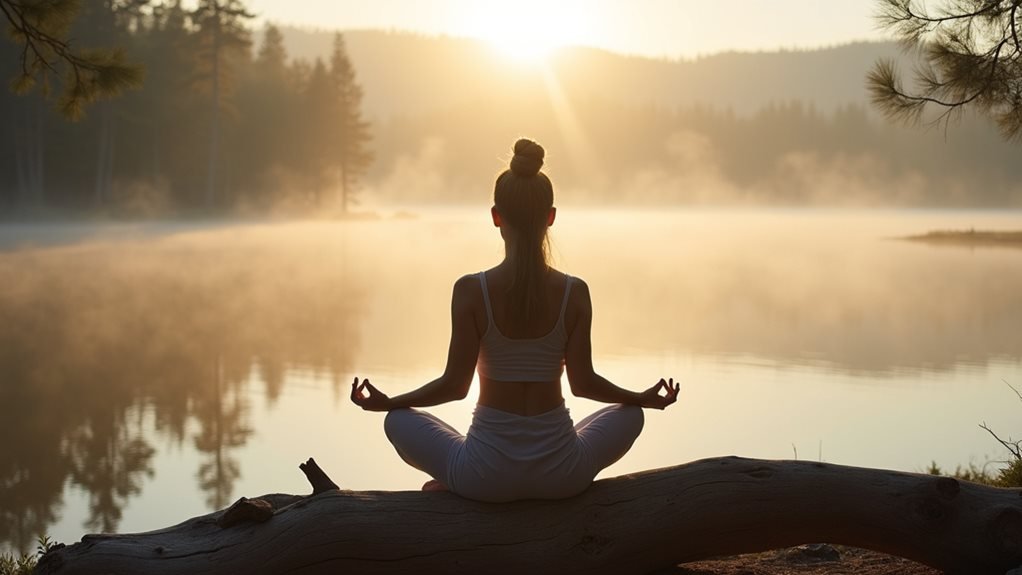
Although cognitive restructuring changes how you think about stress, mindfulness-based stress reduction (MBSR) transforms your relationship with stressful thoughts and feelings entirely.
MBSR doesn’t just change your thinking—it revolutionizes how you relate to stress, anxiety, and overwhelming emotions altogether.
I’ve found that MBSR teaches you to observe anxiety without judgment rather than fighting it. The core practice involves mindfulness meditation, where you focus on your breath while acknowledging thoughts as they arise and pass.
You’ll notice stress patterns without getting caught in them. Start with five minutes daily, gradually increasing to twenty.
Guided imagery complements this practice perfectly. I recommend visualizing a peaceful place while breathing deeply, engaging all your senses in the experience. This technique activates your parasympathetic nervous system, naturally reducing cortisol levels.
What makes MBSR particularly effective is its emphasis on present-moment awareness. You’ll develop the ability to step back from anxious thoughts, recognizing them as temporary mental events rather than absolute truths requiring immediate action.
Frequently Asked Questions
How Long Does It Take to See Results From Stress Management Techniques?
I’ll share realistic timeframe expectations for stress management results.
You’ll typically notice initial changes within 2-4 weeks of consistent practice, though some techniques like deep breathing show immediate effects.
Your results timeline depends on the method you choose and how regularly you practice.
I’ve found that most people experience significant improvements after 6-8 weeks of daily implementation.
Don’t get discouraged if progress feels slow initially – consistency matters more than perfection when building these skills.
Can Stress Management Techniques Replace Anxiety Medication Completely?
I can’t recommend replacing anxiety medication completely with stress management techniques alone.
While these approaches offer powerful medication alternatives and can greatly reduce symptoms, severe anxiety often requires professional medical guidance.
I’d suggest working with your healthcare provider to create an extensive plan that might combine both approaches.
They’ll help determine what’s safest and most effective for your specific situation, potentially allowing you to reduce medication dosages while incorporating proven stress management strategies.
What Should I Do if These Techniques Make My Anxiety Worse?
About 15% of people initially experience increased anxiety when starting new stress management practices.
If techniques worsen your anxiety, I recommend immediately stopping that specific method and adjusting techniques to find gentler alternatives.
Try shorter sessions, different breathing patterns, or mindfulness approaches instead.
Don’t struggle alone—seeking support from a mental health professional helps identify why certain techniques backfire and guides you toward more suitable stress management strategies for your unique needs.
Are There Specific Techniques That Work Better for Panic Attacks?
I recommend focusing on breathing exercises and grounding techniques during panic attacks.
I’ll teach you the 4-7-8 breathing method: inhale for four counts, hold for seven, exhale for eight.
For grounding, I suggest the 5-4-3-2-1 technique: name five things you see, four you touch, three you hear, two you smell, one you taste.
These methods work quickly because they activate your parasympathetic nervous system, interrupting the panic response effectively.
How Do I Maintain Consistency When I’m Too Anxious to Practice?
When you’re drowning in anxiety, practicing stress techniques feels like swimming upstream. I understand this catch-22 completely.
Start with accountability partners who’ll gently check in on your progress—they’re your lifeline when motivation fails. Use gradual exposure by committing to just thirty seconds of practice daily. I’ve seen this work because you’re building momentum without overwhelming yourself.
Once you prove you can handle tiny steps, you’ll naturally expand your practice when anxiety lessens.
With this in Mind
I’ve handed you three powerful keys to release the cage of anxiety that’s been holding you captive. Deep breathing becomes your anchor in stormy seas, progressive muscle relaxation melts away tension like ice in sunlight, and mindfulness transforms your racing thoughts into gentle whispers. Don’t let these tools gather dust—pick them up, practice them daily, and watch as your anxious mind learns to dance with peace instead of wrestling with worry.