

I’ve discovered that when anxiety strikes, you don’t need to suffer through it helplessly. There are seven remarkably simple grounding techniques I’ll share that can calm your racing mind within minutes. These aren’t complex meditation practices or lengthy therapy sessions—they’re quick, practical tools you can use anywhere, anytime. Whether you’re sitting in a meeting or lying awake at night, these methods will help you regain control when panic tries to take over.
Design Highlights
- The 5-4-3-2-1 sensory method quickly redirects focus by identifying 5 things you see, 4 you touch, 3 you hear, 2 you smell, and 1 you taste.
- Deep breathing using the 4-7-8 technique (inhale 4 counts, hold 7, exhale 8) immediately calms the nervous system and reduces anxiety symptoms.
- Progressive muscle relaxation involves tensing and releasing different muscle groups to create physical awareness and promote instant bodily calm.
- Cold water face immersion or holding ice cubes activates the body’s dive response, naturally slowing heart rate and reducing panic feelings.
- Mental math exercises or counting objects in your environment redirects anxious thoughts by engaging the logical mind in simple calculations.
The 5-4-3-2-1 Sensory Method

When anxiety overwhelms your mind, the 5-4-3-2-1 sensory method pulls you back to the present moment through deliberate engagement with your surroundings.
Here’s how the 5 4 3 2 1 application works: First, identify five things you can see around you. Look closely at their colors, shapes, and textures.
Identify five visible objects nearby and examine their specific colors, shapes, and textures to anchor your awareness in the present moment.
Next, notice four things you can touch—feel the temperature, smoothness, or roughness. Then listen for three distinct sounds, whether it’s traffic, air conditioning, or your own breathing.
Focus on two scents you can detect, even subtle ones like soap or fabric. Finally, identify one thing you can taste, perhaps mint gum or the lingering flavor of coffee.
The sensory grounding benefits are immediate. This technique interrupts anxious thought spirals by redirecting your attention to concrete, physical experiences.
You’ll find your racing mind slows down as you methodically engage each sense, creating distance between yourself and overwhelming emotions.
Deep Breathing With the 4-7-8 Technique
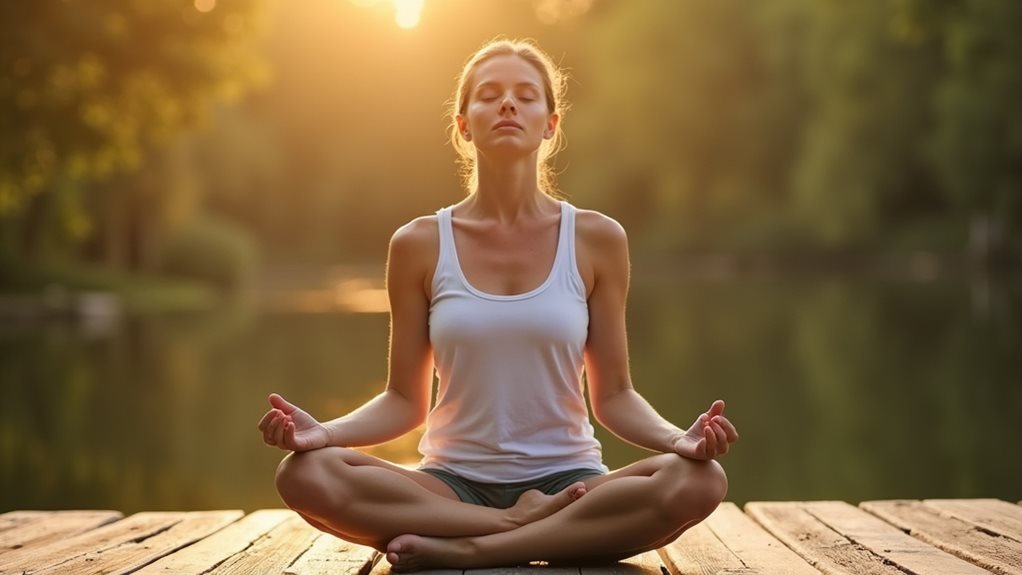
As anxiety tightens your chest and quickens your pulse, the 4-7-8 breathing technique offers a powerful way to activate your body’s natural relaxation response. This method works by slowing your heart rate and calming your nervous system through controlled breath awareness.
Here’s how you’ll practice it: Inhale quietly through your nose for 4 counts, hold your breath for 7 counts, then exhale completely through your mouth for 8 counts. The extended exhale triggers your parasympathetic nervous system, signaling your body to relax.
Start with four cycles and gradually increase as you become comfortable. You’ll notice immediate anxiety reduction as this technique forces your mind to focus on counting rather than anxious thoughts.
The beauty lies in its simplicity—you can use it anywhere without anyone noticing. Practice regularly, even when calm, to strengthen this response for moments when anxiety strikes.
Progressive Muscle Relaxation

Progressive muscle relaxation transforms anxiety’s physical grip on your body by teaching you to systematically tense and release muscle groups from head to toe. This technique helps you distinguish between tension and relaxation, building essential body awareness that many anxious people lack.
Progressive muscle relaxation breaks anxiety’s physical hold by systematically teaching your body the vital difference between tension and deep relaxation.
I’ll guide you through the basic process. Start by finding a comfortable position, either sitting or lying down.
Begin with your toes—clench them tightly for five seconds, then release completely. Notice the contrast between tension and relaxation. Move upward through your calves, thighs, abdomen, hands, arms, shoulders, and facial muscles.
The key is deliberate muscle tension followed by complete release. When you consciously tighten each muscle group, you’re actually preparing it to relax more deeply afterward. This creates a powerful reset for your nervous system.
Practice this technique regularly, and you’ll develop better control over physical anxiety symptoms while enhancing your overall body awareness.
Cold Water Face Immersion

Although it sounds counterintuitive, splashing cold water on your face activates your body’s dive response—a powerful biological mechanism that instantly calms your nervous system during anxiety attacks.
When cold water hits your face, particularly around your eyes and upper cheeks, it triggers the mammalian diving reflex. This evolutionary response slows your heart rate by 10-25% within seconds, helping you shift from fight-or-flight mode to a calmer state.
I recommend keeping the water temperature between 50-60°F for ideal results. You don’t need full face immersion—simply splashing cold water on your face or holding a cold, wet cloth over your eyes and cheeks works effectively.
This technique is especially useful during panic attacks because it provides immediate physiological relief. You can use it anywhere there’s access to cold water, making it one of the most accessible grounding methods available.
The beauty lies in its simplicity and speed—relief comes within 30 seconds.
Mental Math and Counting Exercises

When anxiety overwhelms your mind with racing thoughts, engaging in simple mental calculations forces your brain to shift focus from emotional chaos to logical processing. This redirection creates immediate relief by occupying the cognitive resources that fuel anxious thinking.
Mental calculations redirect your brain from emotional chaos to logical processing, creating immediate relief by occupying the cognitive resources that fuel anxious thinking.
Counting backwards is particularly effective because it requires sustained concentration. Start with 100 and subtract by sevens, or begin at 50 and count down by threes. The effort needed to maintain accuracy keeps your mind anchored in the present moment.
Here are three powerful mental math techniques I recommend:
- Sequential multiplication – Start with 2×2, then 3×3, continuing upward until anxiety subsides.
- Prime number identification – List prime numbers from 2 onwards: 2, 3, 5, 7, 11, 13…
- Category counting – Count items in your environment by color, shape, or size.
These exercises work because they demand active participation from your prefrontal cortex, effectively interrupting anxiety’s automatic response patterns.
Physical Movement and Body Awareness
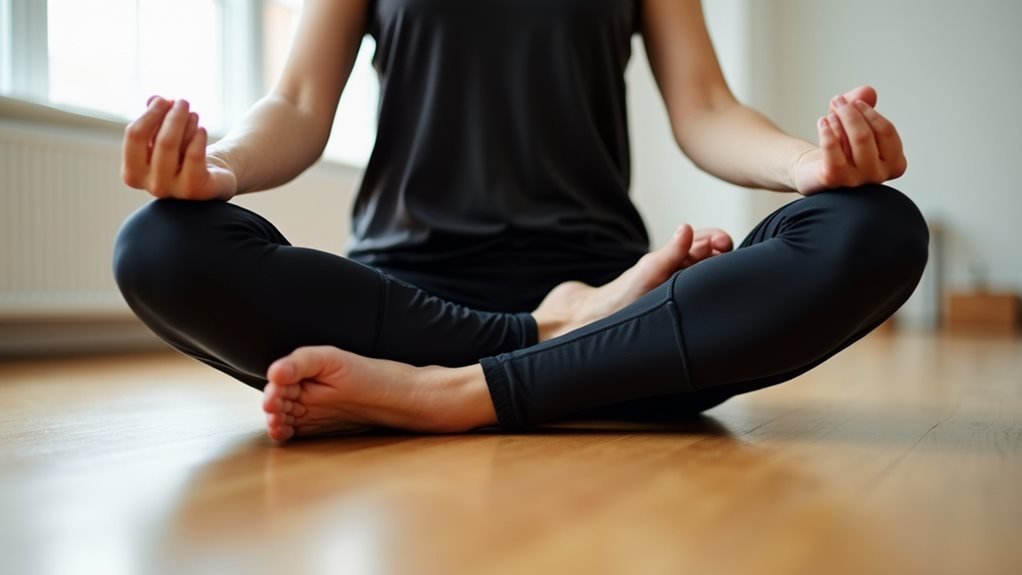
While mental exercises redirect anxious thoughts, your body often holds tension and stress that requires physical release. I’ll show you how physical movement and body awareness can quickly ground you during anxious moments.
Start with body scanning – systematically notice each part of your body from head to toe. I recommend lying down or sitting comfortably, then mentally checking in with your forehead, jaw, shoulders, arms, chest, stomach, and legs. Notice where you’re holding tension without trying to change anything initially.
Mindful walking offers another powerful grounding technique. Take slow, deliberate steps while focusing on how your feet connect with the ground. Feel the weight shift from heel to toe with each step. This connects you to the present moment while releasing physical anxiety.
Simple movements like shoulder rolls, gentle neck stretches, or clenching and releasing your fists help discharge nervous energy. Your body’s wisdom knows how to release stress when you give it permission.
Visualization and Safe Space Imagery
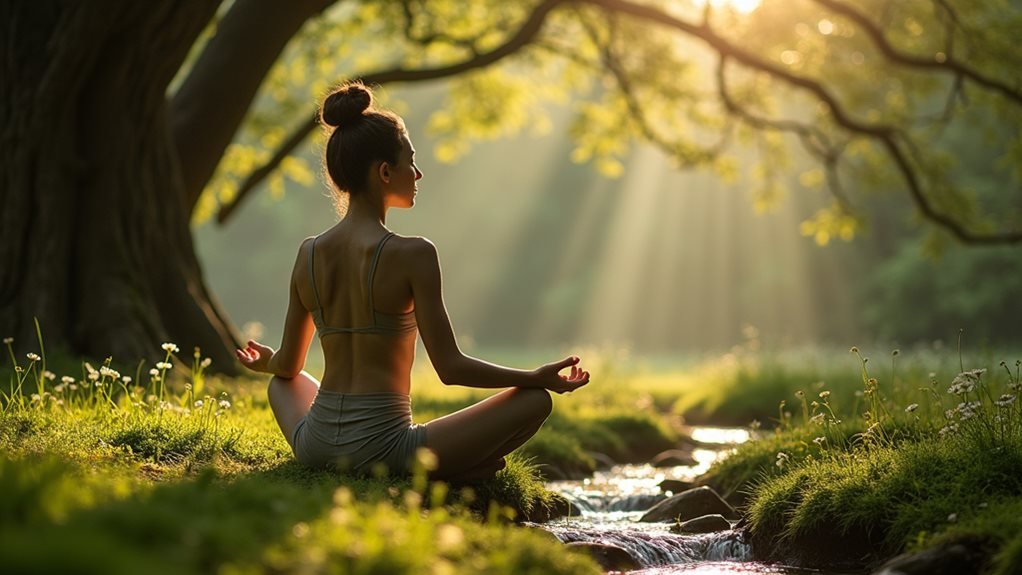
Since your mind naturally creates anxious scenarios, you can harness this same imaginative power to create calm and safety instead.
Visualization techniques redirect your mental energy toward peaceful, stabilizing images that counteract anxiety’s grip on your thoughts.
Guided imagery works by engaging your senses in detailed mental scenes. I recommend starting with peaceful landscapes like beaches, forests, or mountains – places that naturally evoke tranquility. Your brain responds to these visualized environments as if they’re real, triggering your body’s relaxation response.
Here’s how to build your safe space visualization:
- Choose your setting – Select a location where you feel completely secure and calm.
- Add sensory details – Include sounds, textures, temperatures, and scents to make it vivid.
- Practice regularly – Spend 5-10 minutes daily strengthening this mental refuge.
When anxiety strikes, you’ll have immediate access to this calming sanctuary, providing instant relief through the power of your imagination.
Frequently Asked Questions
How Long Does It Take for Grounding Techniques to Start Working?
I’ll tell you that grounding techniques can start working within minutes, though the time duration varies for each person.
You might notice immediate effects like slower breathing or reduced racing thoughts within 30 seconds to 2 minutes of starting a technique.
I’ve found that simple methods like the 5-4-3-2-1 sensory technique or deep breathing often provide the quickest relief.
However, don’t worry if it takes longer initially – your response time improves with practice.
Can Grounding Techniques Replace Anxiety Medication or Therapy?
Studies show 70% of people with anxiety disorders benefit most from combined treatment approaches.
I can’t recommend replacing your medication or therapy with grounding techniques alone. While grounding effectiveness is well-documented for immediate relief, these tools work best as part of thorough anxiety management.
I’d suggest discussing grounding techniques with your healthcare provider as a valuable addition to, not replacement for, your current treatment plan.
Which Grounding Technique Works Best for Panic Attacks?
I’ve found that breathing exercises work exceptionally well during panic attacks because they directly counteract hyperventilation.
I recommend the 4-7-8 technique: inhale for 4 counts, hold for 7, exhale for 8.
However, sensory awareness techniques like the 5-4-3-2-1 method also help tremendously by redirecting your focus from panic symptoms to your immediate environment.
I’d suggest practicing both when you’re calm, so you’ll remember them when panic strikes unexpectedly.
How Often Should I Practice Grounding Techniques Daily?
Like watering a plant to help it flourish, I recommend you practice grounding techniques 2-3 times daily even when you’re not anxious.
Your daily practice doesn’t need lengthy sessions – just 3-5 minutes each time works perfectly.
I’ve found that consistent grounding benefits include faster anxiety relief when panic strikes and improved overall emotional regulation.
You’ll build muscle memory, making these techniques more effective during actual anxiety episodes when you need them most.
Are There Any Side Effects From Using Grounding Techniques?
I’ve found that grounding methods are generally very safe with minimal side effects.
You might experience temporary dizziness if you’re doing breathing exercises too quickly, or slight fatigue after intense focus techniques. Some people feel emotional release, which can bring up feelings temporarily.
I’d say the biggest “side effect” is actually positive – you’ll likely feel more centered and calm.
If you have specific health conditions, I’d recommend checking with your healthcare provider first.
With this in Mind
When anxiety storms through your mind, these seven grounding techniques become your anchor in turbulent waters. I’ve shown you how the 5-4-3-2-1 method, deep breathing, muscle relaxation, cold water, mental exercises, movement, and visualization can quickly restore your calm. You don’t need to master them all—just find what works for you. Practice these tools regularly, and you’ll discover that peace isn’t something you find; it’s something you create within yourself.