

I’ve discovered that the most meaningful self-care practices don’t require opening my wallet or downloading another app. While the wellness industry wants you to believe that transformation comes with a price tag, I’ve found three simple yet powerful approaches that cost absolutely nothing but deliver remarkable results. These methods have quietly revolutionized how I approach my mental and physical well-being, and they’re probably hiding in plain sight within your current routine.
Design Highlights
- Create a personal sanctuary using existing items like a comfortable chair, soft blanket, and meaningful objects you already own.
- Practice simple movement and breathwork combinations like stretching with deep breathing for just five minutes daily.
- Establish phone-free zones and device-free meal times to build deeper connections and reduce digital overwhelm.
- Clear clutter from your living space to improve mental clarity and focus without purchasing new organizational products.
- Use the 4-7-8 breathing technique during stressful moments as a free, accessible tool for immediate stress relief.
Create a Personal Sanctuary in Your Own Space

When life feels overwhelming, carving out a dedicated space for yourself becomes essential for maintaining mental and emotional balance.
I’ll show you how to transform any corner of your home into a mindful space that costs nothing but delivers powerful restoration.
Start by choosing a quiet area—even a chair by the window works perfectly. Clear away clutter and distractions. This simple act immediately creates mental clarity.
Next, incorporate sensory elements using items you already own. Place a soft blanket nearby for comfort, arrange houseplants for natural beauty, or position a small lamp for warm lighting.
Add personal touches that bring you joy: favorite books, meaningful photos, or a journal. The key isn’t spending money—it’s intentional curation. Your sanctuary should reflect what calms you specifically.
I recommend establishing boundaries around this space. When you’re there, you’re practicing self-care. This psychological association strengthens over time, making your sanctuary increasingly effective.
Harness the Power of Movement and Breathwork
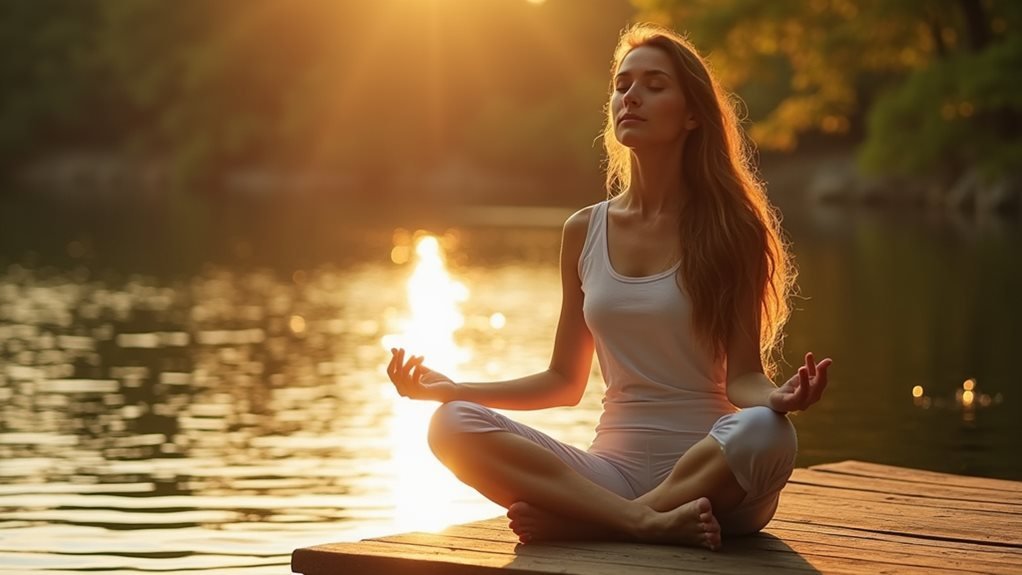
While many people think they need expensive gym memberships or equipment to benefit from movement, the most powerful combination for stress relief exists right where you are: simple movement paired with intentional breathing.
I’ve discovered that mindful stretching transforms ordinary moments into opportunities for self-care. You can practice gentle neck rolls while working, reach your arms overhead during TV commercials, or perform simple spinal twists before bed. The key isn’t intensity—it’s awareness.
Conscious breathing amplifies these benefits exponentially. Try the 4-7-8 technique: inhale for four counts, hold for seven, exhale for eight. This activates your parasympathetic nervous system, naturally reducing stress hormones.
Simple breathwork creates profound shifts—inhale for four, hold for seven, exhale for eight to naturally calm your nervous system.
Combine both by flowing through basic stretches while focusing on deep, rhythmic breaths. Even five minutes creates measurable changes in your mood and energy levels. Your body becomes your most accessible tool for instant stress relief, requiring nothing but attention and intention.
Build Meaningful Connections Through Digital Detox
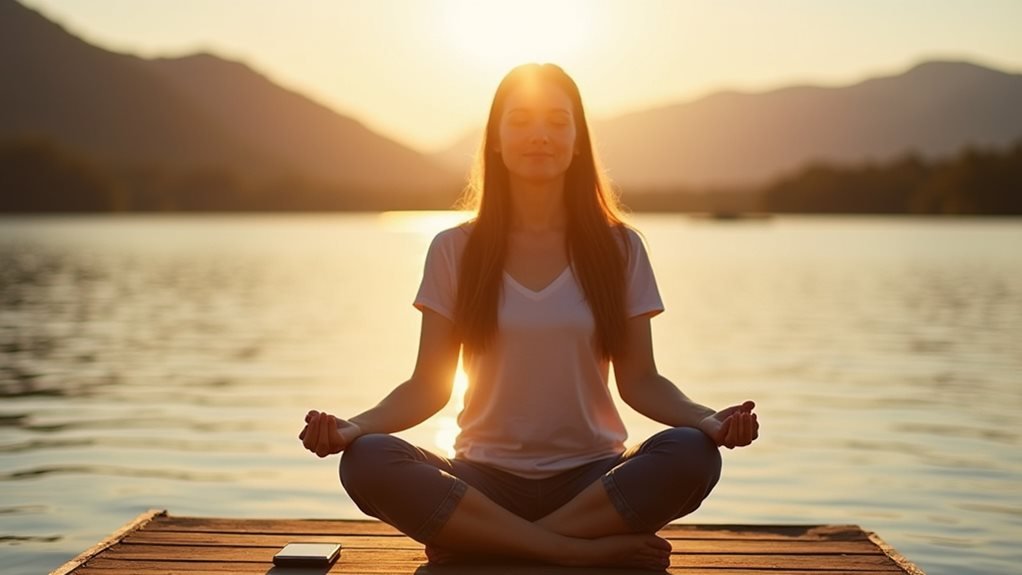
Although we’re more connected than ever through technology, many of us feel increasingly isolated and overwhelmed by the constant digital noise.
I’ve discovered that stepping away from screens creates space for genuine human connection and personal reflection.
Digital detox doesn’t require expensive retreats or complete disconnection. Here’s how I build meaningful relationships while giving my mind a break:
- Schedule phone-free meals – I put devices away during eating and focus on mindful communication with family or friends, creating deeper conversations and quality time together.
- Take walking meetings – Instead of video calls, I suggest walking while talking on the phone, combining movement with connection while staying present.
- Create device-free zones – I designate specific areas in my home where technology isn’t allowed, encouraging face-to-face interactions and quiet reflection.
These simple practices help me reconnect with what truly matters without spending a dime.
Frequently Asked Questions
How Do I Maintain Self-Care Routines When I’m Extremely Busy With Work?
I understand how overwhelming work can become, making self-care feel impossible.
I recommend integrating micro-moments of stress relief into your existing schedule rather than adding separate tasks. You can practice deep breathing between meetings, take walking breaks, or do desk stretches.
Effective time management means treating self-care as non-negotiable appointments with yourself. I’ve found that even five-minute meditation sessions or quick gratitude practices can greatly impact your well-being during hectic periods.
What Are Simple Ways to Practice Self-Care During My Lunch Break?
Peaceful pauses produce powerful results during your lunch break!
I recommend practicing mindful eating by savoring each bite without distractions—put away your phone and truly taste your food.
Take brief nature walks around your building or nearby park to refresh your mind. You can also do desk stretches, practice deep breathing exercises, or listen to calming music.
These simple activities help you recharge and return to work feeling more centered and energized.
How Can I Practice Self-Care When Living With Roommates or Family?
Living with others doesn’t mean sacrificing your well-being. I recommend creating boundaries around shared spaces by communicating your needs respectfully.
You can find quiet moments by waking up earlier, using headphones for meditation, or stepping outside briefly.
I suggest establishing a small personal corner in your room that’s just yours.
You’ll also benefit from practicing gratitude journaling, deep breathing exercises, or gentle stretching – all activities that don’t require much space or privacy.
What Self-Care Activities Work Best for People With Physical Limitations?
Society loves pretending self-care means expensive spa days and gym memberships, leaving people with physical limitations feeling excluded from wellness culture.
I’m here to tell you that’s ridiculous. You can practice incredible self-care through adaptive exercises that work with your body’s needs, not against them.
Try chair yoga, gentle stretching, or resistance band workouts. Mindful breathing exercises cost nothing but offer tremendous benefits for both physical comfort and mental clarity.
How Do I Stay Motivated to Continue Self-Care When Feeling Depressed?
When you’re feeling depressed, I understand that maintaining self-care feels overwhelming. I recommend starting incredibly small – even five minutes counts.
I suggest using simple mindfulness techniques like focusing on your breath or noticing three things around you.
Try basic journaling prompts such as “What’s one thing I’m grateful for today?” or “How do I feel right now?”
I’ve found that consistency matters more than intensity when depression makes everything feel harder.
With this in Mind
Who knew you didn’t need to drop a fortune on expensive spa treatments and wellness retreats to feel human again? I’ve just shown you three revolutionary concepts: cleaning your space, moving your body, and putting down your phone. Groundbreaking stuff, right? While everyone’s maxing out credit cards chasing the latest self-care trends, you’ll be over here thriving with techniques our ancestors somehow survived on for millennia.